
What Topgolf’s Struggles Can Teach the Rest of Entertainment Hospitality About Dwell Time, Experience, and Revenue
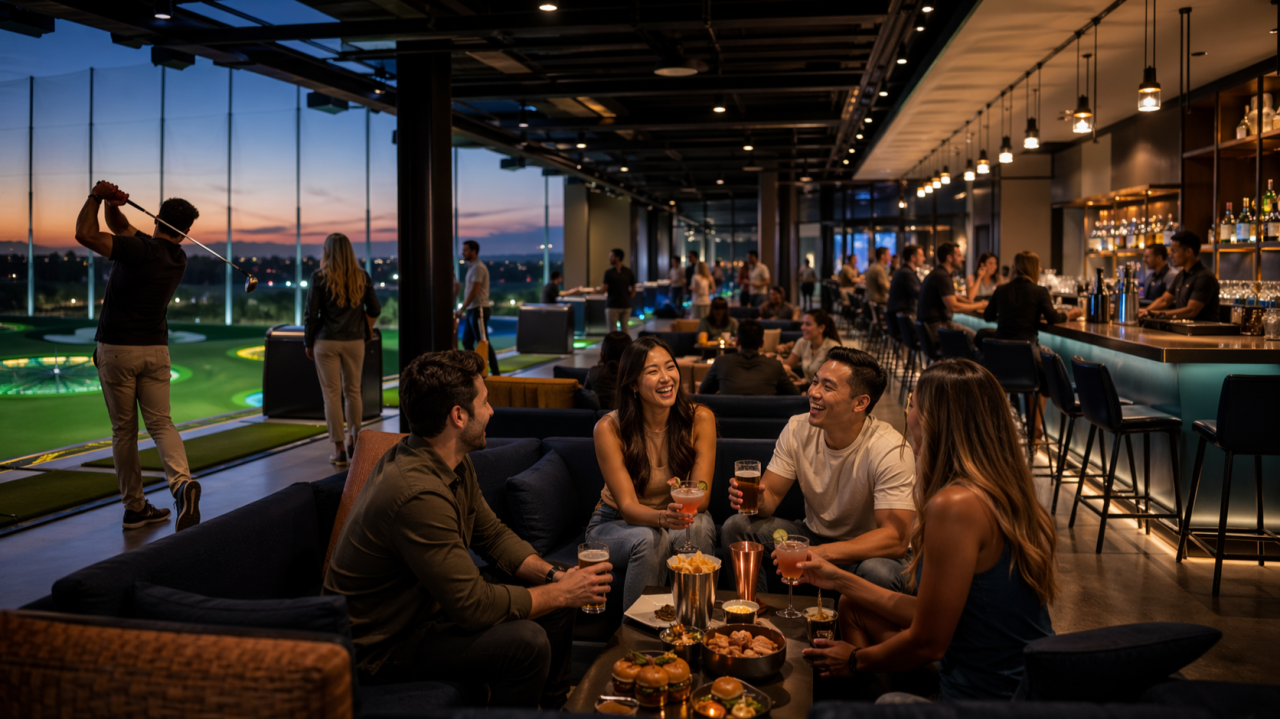
In his August 16, 2024 FSR article, What Topgolf’s Struggles, and a Mouse (No, Not that One) Can Teach Us, TJ Schier, Jr argues that entertainment-driven hospitality brands cannot rely on novelty, loose positioning, or early momentum to sustain long-term growth. The piece, published by FSR and highlighted by Danny Klein as a roadmap for eatertainment operators, centers on a hard truth...these businesses win or lose based on whether they stay relevant to a clearly defined audience and keep the experience fresh enough to justify repeat visits.
That assessment is right, and it is worth extending.
The most important operating principle in this category is that guests usually do not show up for the food and beverage first. They show up for the experience. They come for the game, the event, the outing, the group activity, the escape, the social proof, or the chance to do something that feels more memorable than a standard meal. Food and beverage do matter, but in most entertainment-led venues, they are not the primary draw. They are supporting architecture.
That distinction matters because it changes how operators should think about revenue.
Traditional restaurant logic starts with menu mix, check averages, and turn times. Entertainment hospitality has to start with dwell time, friction, and experience continuity. The question is not only, “How do we sell more food and drinks?” The better question is, “How do food and beverage help guests stay longer, enjoy more, and spend more across the visit?”
Schier’s underlying warning is especially relevant because the Topgolf story showed what happens when a powerful concept meets the realities of repeat behavior. Topgolf Callaway reported that same-venue sales declined 8 percent in the second quarter of 2024, driven by weaker traffic, and announced a formal strategic review focused on returning the business to profitable same-venue sales growth. The company also lowered its 2024 revenue outlook and said softer discretionary spending and weaker event demand were pressuring results (Topgolf Callaway Brands Q2 2024 earnings materials, August 7, 2024).
Those numbers do not suggest that the concept failed. They suggest something more useful for the rest of the market.... even highly visible entertainment brands are not exempt from the math of guest motivation. Scale can amplify awareness, but it can also expose weaknesses in repeatability. When the novelty curve flattens, operators are left with the fundamentals. Who is the guest? Why are they coming? What keeps them there longer? What makes them come back?
That is where dwell time becomes the real operating lever.
In entertainment-led venues, dwell time is not a vanity metric. It is the bridge between guest experience and revenue performance. A guest who stays longer has more opportunities to buy another round, add snacks, upgrade an experience, purchase a premium offering, or extend group spending. A guest whose visit feels seamless is also more likely to return. The reverse is just as true. If friction enters the experience through long waits, broken flow, underwhelming ancillary offers, or stale programming, the venue starts leaking revenue before it ever shows up in a financial statement.
That leakage is often misdiagnosed.
Operators frequently talk about labor cost, menu profitability, or traffic softness. Those are real issues, but they are often downstream effects. The upstream issue is whether the venue is adding enough to the guest experience to justify staying another 20 minutes, ordering one more item, or planning the next visit. If the answer is no, then food and beverage stop functioning as multipliers and start functioning as a static utility.
This is why the best entertainment venues treat food and beverage as part of the attraction, not just a department.
A drink program in this environment should not be evaluated only by pour cost or margin percentage. It should also be evaluated by whether it reinforces the experience. Does it reduce friction or add it? Does it create speed or slow down the outing? Does it feel native to the venue’s identity? Does it encourage one more round? Does it give the guest a reason to stay through the next activity block instead of leaving?
That is the broader lesson to pull from Schier’s piece. In this category, the operating model has to support the emotional promise of the concept.
If the venue promises fun, the service cannot feel burdensome. If the venue promises social energy, the guest journey cannot feel interrupted. If the venue promises memorable moments, food and beverage cannot feel generic or secondary. If the venue depends on repeat traffic, the experience cannot remain static.
This is also where many operators make a strategic mistake. They assume that because guests are not coming primarily for food and beverage, the category only needs to be “good enough.” That is backwards. Supporting categories in entertainment venues have to work harder, not less. Their role is to protect momentum. They keep the guest from breaking the spell of the experience.
The same principle applies to throughput. In a conventional bar, slow service is a bar problem. In an entertainment venue, slow service is an experience problem. It interrupts the flow of the outing. It shortens dwell time. It reduces willingness to order again. It lowers group energy. It can even dilute the perceived value of the core attraction. That is why experience-supporting infrastructure matters so much in these businesses. Every operational bottleneck becomes a commercial bottleneck.
Schier’s original point about brand clarity and experience design deserves credit because it pushes operators to think beyond surface-level tactics. The Topgolf conversation is not only about golf bays, pricing, or promotions. It is about a larger challenge facing all competitive socializing and eatertainment brands....once consumers understand what you are, why should they keep choosing you? I think the clarity that Davis Webb and Pourcast are bringing to the conversation also support this as well.
The answer is not just better marketing. It is better orchestration.
Operators need a sharper understanding of their core audience, a more disciplined refresh cycle, and a stronger point of view on how every supporting element contributes to total guest value. Food and beverage sit directly inside that equation. Not because they are the main event, but because they either strengthen or weaken the event around them.
That is the strategic takeaway.
People do not typically show up for the food. They show up for the experience. But the quality, speed, integration, and memorability of food and beverage often determine how long they stay, how much they spend, and whether they come back.
For entertainment-led hospitality, that means the future belongs to operators who stop treating ancillary revenue as secondary and start treating it as experience reinforcement. The venues that win will be the ones that understand a simple principle: when you add meaningfully to the outing, you increase dwell time. When you increase dwell time, you increase revenue.
And that is the part of the business too many operators still underestimate.