Why So Many Bar Operators Feel Stuck Right Now
If it feels like running a bar has gotten harder every year, you are not imagining it. Costs keep climbing, good staff are harder to hold onto, and guests still expect a fast, consistent drink no matter how short handed you are that night. You’re not choosing between doing great and doing fine anymore. Most nights, the real win is just keeping the rail moving without losing a bartender, a shift, or your margin.
That squeeze is real, and the numbers back it up.
The Staffing Problem Isn't Going Away
Ask almost any operator what keeps them up at night and labor comes up first, from both directions.
Labor costs were named a significant challenge by 96% of full service operators and 94% of limited service operators, according to the National Restaurant Association's 2026 State of the Restaurant Industry report
Recruiting and retaining employees is still a significant challenge for roughly 6 in 10 operators, even after a couple of years of the hiring market loosening up
Bartenders and other front-of-house roles see annual turnover near 41%, while the broader hospitality sector runs even higher, with the Bureau of Labor Statistics putting accommodation and food service turnover at 65.5% according to their recent stats.
That kind of churn doesn't just cost money to replace. Every time someone walks out the door, you are retraining a recipe, a pace, and a standard, again.
Every Drink That Isn't Tracked Is Money Leaving the Building
Even when the team is fully staffed, there is a quieter problem happening behind the bar. Most operators have a rough sense of their pour cost, but few actually measure it consistently, and the gap between what should be poured and what actually leaves the bottle adds up fast.
Industry benchmarks show the average bar loses somewhere between 5% and 20% of its beverage inventory to variance and shrinkage. That gap usually comes from a mix of things.
Over pouring, whether from a heavy hand or a skipped jigger
Spillage that nobody tracks during a busy shift
Untracked comps that never get rung in
Recipe drift, where a drink quietly gets built heavier than spec over time
On a bar doing meaningful volume, that is not a rounding error. It is real revenue that never shows up on a report because nobody was watching for it.
Guests Still Want More, Even When Money Is Tight
Here is the part that makes all of this harder to solve with a simple fix. Demand has not disappeared, it has just gotten pickier.
Sixty percent of restaurant operators reported softer customer traffic this past year, even as total industry sales are projected to reach 1.55 trillion dollars. Guests are still going out. They are just being more deliberate about where they spend, which means a slow drink or an inconsistent pour has less room for forgiveness than it used to.
Add rising labor and beverage cost pressure on top of softer traffic, and you get a business where every inefficiency matters more than it did five years ago.
"Just Add Technology" Isn't Actually Simple Advice
Faced with all of this, a lot of operators land on the same instinct. Something needs to change, and technology feels like the obvious lever to pull. The problem is that "automation" gets used as if it means one specific thing, and it doesn't.
Some tools speed up a bartender's hands without changing much else
Some are built for a single high volume menu and fall apart outside of it
Some look impressive in a demo and solve almost nothing that was actually slowing your bar down on a Friday night
Interestingly, operators themselves seem to sense this tension. 74% say they view technology as something that should support their staff, not replace them, according to the National Restaurant Association's own research. The instinct to automate is right. The part that trips people up is figuring out which approach actually fits your bar, your volume, and your team, before writing a check.
The Question Every Operator Eventually Asks
Strip away the sales pitches and the buzzwords, and almost every operator ends up asking the same plain question. Is this actually worth it for a bar like mine, or am I about to spend a lot of money solving a problem I don't really have?
That’s a fair question, and it deserves a straight answer instead of a demo reel or a product pitch. The right answer depends on a few specific things.
Your actual peak hours, not just your average night
Your current labor model and how much of it is repeatable, measurable work
What your real pour cost looks like once shrinkage is counted
What is actually breaking down when the bar gets slammed
Those answers look different for a neighborhood restaurant than they do for a casino floor or a stadium concourse, which is exactly why so many operators end up stuck comparing options with no real framework for the decision.
A Straight Answer, Before You Talk to a Single Vendor
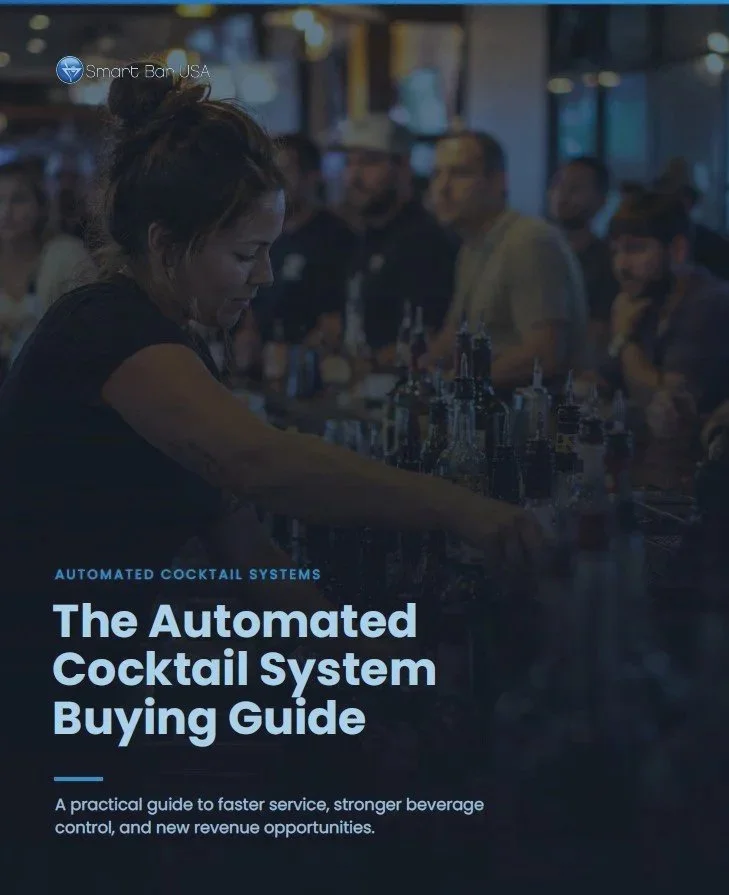
We built the Automated Cocktail System Buying Guide for exactly this moment, after the staffing math stops working and before you sit through a sales call.
It won't try to convince you that automation is right for every bar, because it isn't. Instead, it walks through the real questions worth asking, where automation tends to pay for itself fastest, and how to tell the difference between a tool that will actually fix your bottleneck and one that just looks good in a demo.
If you're weighing speed, staffing, and beverage control against the cost of doing something about it, this is the guide to read first.
Download the free Automated Cocktail System Buying Guide
and get a clear answer before you spend a dollar on equipment.